
Artificial Intelligence vs Machine Learning vs Deep Learning
Understanding the Key Differences, Real-World Applications, and Future of Smart Technologies
Introduction
Artificial Intelligence vs Machine Learning vs Deep Learning are three powerful technologies dominating today's innovation landscape. While these terms are interconnected, they represent distinctly different concepts that professionals often confuse.
Companies worldwide are investing heavily in Artificial Intelligence vs Machine Learning vs Deep Learning projects. However, without clear understanding, teams struggle to choose the right approach for specific problems. This comprehensive guide breaks down these concepts in simple, practical terms.
Whether you are a student exploring career options, a professional looking to upskill, or a business leader evaluating technology investments, this article provides clear explanations, real-world examples, and actionable insights. Let us dive into understanding what makes each technology unique and where they fit in the broader tech landscape.
What is Artificial Intelligence?
Artificial Intelligence refers to the broad field of computer science focused on creating systems capable of performing tasks that typically require human intelligence. These tasks include visual perception, speech recognition, decision-making, language translation, and problem-solving.
AI is an umbrella term covering various technologies and approaches. When you use voice assistants like Siri or Alexa, get recommendations from Netflix, or see facial recognition unlock your phone, you are experiencing AI in action. The primary goal is creating machines that can mimic human cognitive functions and adapt to new situations.
For a deeper technical explanation, you can also explore IBM's official guide on AI technologies available at IBM Cloud AI Learning Center.
Common Examples of AI in Daily Life:
- Virtual Assistants: Amazon Alexa, Google Assistant, and Apple Siri that understand voice commands and execute tasks
- Autonomous Vehicles: Self-driving cars from Tesla and Waymo that navigate roads using sensors and algorithms
- Smart Recommendations: Netflix, Spotify, and Amazon suggesting content based on your preferences and behavior
- Chatbots: Customer service bots handling queries on websites and messaging platforms 24/7
- Fraud Detection: Banking systems identifying suspicious transactions in real-time
AI systems can be rule-based (following programmed instructions) or learning-based (adapting from data). The field continues evolving rapidly, with new applications emerging across healthcare, finance, education, and entertainment sectors.
What is Machine Learning?
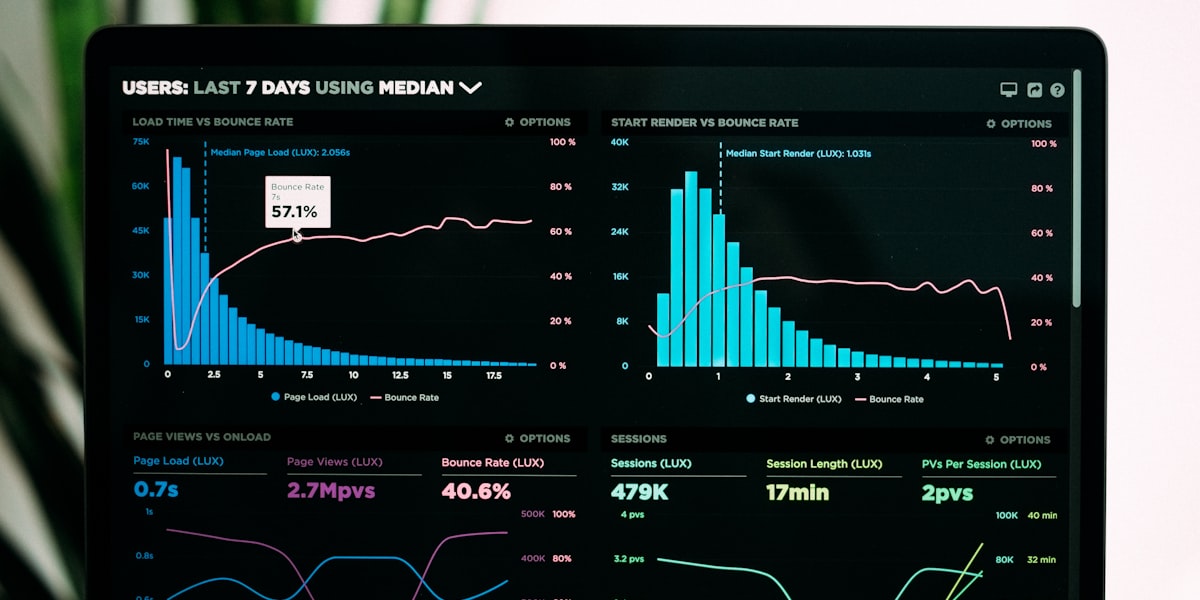
Machine Learning is a subset of Artificial Intelligence. While AI is the broad goal of creating intelligent machines, Machine Learning is the specific method that enables computers to learn from data and improve from experience without being explicitly programmed for every scenario.
Traditional programming requires developers to write specific rules: "If X happens, do Y." Machine Learning flips this approach. Instead of programming rules, we feed algorithms large datasets and allow them to identify patterns and make decisions independently. The system learns from examples, much like humans learn from experience.
Three Main Types of Machine Learning:
Supervised Learning
The algorithm learns from labeled training data where both inputs and correct outputs are provided. It is like learning with a teacher who provides correct answers.
Example: Email spam filters learning from emails marked as spam or not spamUnsupervised Learning
The algorithm works with unlabeled data and must find hidden patterns, structures, or relationships on its own without guidance.
Example: Customer segmentation grouping similar customers based on purchasing behaviorReinforcement Learning
The algorithm learns through trial and error, receiving rewards for correct actions and penalties for mistakes, optimizing its strategy over time.
Example: Game-playing AI mastering chess or Go through millions of practice gamesWhat is Deep Learning?

Deep Learning is a specialized subset of Machine Learning. It takes inspiration from the structure and function of the human brain, using artificial neural networks with multiple layers (hence "deep") to process information and learn complex patterns.
While traditional Machine Learning works well with structured data and simpler patterns, Deep Learning excels at handling unstructured data like images, audio, video, and text. Each layer in a deep neural network extracts increasingly complex features. Early layers might detect edges in an image, middle layers identify shapes, and deeper layers recognize complete objects or faces.
Deep Learning Applications You Use Daily:
- Facial Recognition: Unlocking smartphones, tagging friends in Facebook photos, and airport security systems
- Voice Assistants: Siri, Alexa, and Google understanding natural speech, accents, and context
- Medical Imaging: Detecting tumors, fractures, and diseases in X-rays and MRIs with high accuracy
- Autonomous Driving: Real-time object detection identifying pedestrians, traffic signs, and other vehicles
- Language Translation: Google Translate understanding context and nuance across languages
- Content Creation: AI generating images, writing text, and composing music
Deep Learning requires substantial computing power (typically GPUs) and large amounts of training data. However, it delivers remarkable accuracy for complex tasks that traditional algorithms struggle with. As data generation increases globally, Deep Learning applications continue expanding rapidly.
Artificial Intelligence vs Machine Learning vs Deep Learning: Key Differences Explained

Understanding the AI vs ML vs DL comparison becomes clearer when you see their relationship. They are not competitors but nested categories, each serving different purposes and complexity levels.
| Feature | Artificial Intelligence | Machine Learning | Deep Learning |
|---|---|---|---|
| Definition | Broad field of creating intelligent machines simulating human cognition | Subset of AI where algorithms learn patterns from data | Subset of ML using multi-layered neural networks |
| Scope | Widest - includes all smart technologies | Medium - specific approach within AI | Narrowest - specialized technique within ML |
| Data Needs | Can be rule-based without large datasets | Requires moderate structured data | Requires massive amounts of data |
| Computing Power | Varies by application | Moderate requirements | High - needs GPUs/TPUs |
| Human Intervention | High - extensive manual coding | Medium - feature engineering needed | Low after training - automatic features |
| Training Time | Quick for rule-based systems | Moderate duration | Long - hours to weeks |
| Interpretability | High - transparent logic | Moderate - some models explainable | Low - often "black box" |
| Best Use Cases | Logical reasoning, rule-based decisions | Predictions, classifications, regressions | Image recognition, NLP, complex patterns |
| Examples | Chess programs, expert systems | Spam filters, credit scoring | Face recognition, voice assistants |
The AI vs ML difference is simple: AI is the destination, ML is one vehicle to reach it. The Deep Learning vs Machine Learning distinction is like comparing a sports car to a sedan—both get you there, but the sports car handles complex terrain better if you have the right infrastructure.
Real-World Industry Applications

The Applications of Artificial Intelligence span virtually every industry. Here is how these technologies create real value:
Healthcare
AI assists radiologists in detecting tumors and fractures. Machine Learning predicts patient readmission risks. Deep Learning analyzes pathology slides for cancer detection. Robotic surgery systems perform minimally invasive procedures with precision exceeding human capability.
Finance
Real-time fraud detection using ML algorithms flag suspicious transactions instantly. Algorithmic trading systems analyze market trends and execute trades in milliseconds. Credit scoring models evaluate loan applications using alternative data for better accuracy and inclusion.
Retail & Marketing
Personalized product recommendations increase sales and customer satisfaction. Dynamic pricing algorithms adjust prices based on demand, competition, and inventory. Chatbots handle customer inquiries 24/7. Visual search lets customers find products using images.
Manufacturing
Computer vision systems detect product defects with superhuman accuracy. Predictive maintenance forecasts equipment failures before they occur, preventing costly downtime. Supply chain optimization ensures optimal inventory levels and logistics routing.
These AI technology trends are not future possibilities—they are current realities. Organizations adopting these technologies gain significant competitive advantages through improved efficiency, reduced costs, enhanced customer experiences, and data-driven decision making.
Advantages and Limitations
Every technology has strengths and weaknesses. Understanding these helps organizations choose the right approach for specific challenges.
✅ Advantages
- Operates continuously without fatigue or breaks
- Eliminates human error in repetitive tasks
- Processes massive datasets rapidly
- Handles dangerous environments without risk to humans
- Provides consistent, unbiased performance
- Scales efficiently across large operations
❌ Limitations
- High development and implementation costs
- Potential job displacement in certain sectors
- Ethical concerns around privacy and bias
- Lacks human creativity, empathy, and common sense
- Requires ongoing maintenance and updates
- Vulnerable to adversarial attacks
✅ Advantages
- Improves continuously as more data becomes available
- Identifies complex patterns humans might miss
- Highly scalable across applications
- Automates decision-making processes
- Handles high-dimensional data effectively
- Reduces need for explicit programming
❌ Limitations
- Requires large volumes of quality training data
- Can perpetuate biases present in training data
- Risk of overfitting to training data
- Model interpretability challenges
- Feature engineering requires expertise
- Performance depends on data quality
✅ Advantages
- Excels at unstructured data (images, audio, text)
- Achieves state-of-the-art accuracy
- Automatic feature extraction
- Handles extremely complex patterns
- Transfer learning enables rapid deployment
- Continuously improving with more data
❌ Limitations
- "Black box" nature - difficult to interpret decisions
- Requires massive datasets for training
- Demands expensive hardware (GPUs)
- Long training times (hours to weeks)
- High energy consumption
- Vulnerable to adversarial examples
Future Trends and Developments
The field evolves rapidly. Here are key trends shaping the future of these technologies:
- Edge AI: Processing data locally on devices rather than cloud servers, enabling faster responses and better privacy protection
- AutoML: Automated Machine Learning platforms allowing non-experts to build sophisticated models without deep technical knowledge
- Explainable AI (XAI): Making AI decision-making transparent and understandable, crucial for regulatory compliance and trust
- Federated Learning: Training models across decentralized devices while keeping data private and secure
- Multimodal AI: Systems processing and understanding multiple data types (text, image, audio) simultaneously
- AI Governance: Establishing ethical frameworks and regulations for responsible AI development and deployment
Conclusion
Understanding Artificial Intelligence vs Machine Learning vs Deep Learning is essential for navigating today's technology landscape. Remember the hierarchy: AI is the broad goal, ML is the primary method to achieve it, and Deep Learning is the advanced technique for complex problems.
If you want to explore practical AI tools and their implementation strategies, read our detailed guide on AI for Ads & Marketing Strategy.
Each technology serves specific purposes. AI provides the overarching framework. Machine Learning offers practical tools for data-driven predictions and classifications. Deep Learning tackles the most complex challenges involving unstructured data like images, speech, and natural language.
In summary, understanding Artificial Intelligence vs Machine Learning vs Deep Learning helps students, professionals, and businesses choose the right technology for their needs. Whether building products, managing teams, or investing in innovation, this knowledge enables better strategic decisions.
Frequently Asked Questions
Which is easier to learn: Machine Learning or Deep Learning?
Machine Learning is generally easier for beginners. It requires less computational resources and smaller datasets to start. Deep Learning demands understanding of neural network architectures, requires powerful hardware (GPUs), and needs large amounts of data. Most experts recommend mastering ML fundamentals before diving into Deep Learning.
Can you have Deep Learning without Machine Learning?
No, Deep Learning is actually a specialized subset of Machine Learning. It uses the same fundamental principles of learning from data but employs more complex neural network architectures. You cannot have Deep Learning without Machine Learning, just as you cannot have Machine Learning without Artificial Intelligence.
What are the salary prospects in AI, ML, and Deep Learning?
Careers in these fields offer excellent compensation. Entry-level Machine Learning Engineers typically earn $80,000-$120,000 annually in the US, while experienced professionals and Deep Learning specialists can command $150,000-$300,000+. Data Scientists, AI Research Scientists, and Computer Vision Engineers are among the highest-paid tech roles globally, with demand consistently exceeding supply.
Do I need to know programming to work in AI?
Yes, programming is essential. Python is the dominant language in AI/ML due to its extensive libraries (TensorFlow, PyTorch, scikit-learn). You should also understand mathematics (linear algebra, calculus, statistics) and data manipulation. However, no-code and low-code AI platforms are emerging, making basic AI accessible to non-programmers for simple applications.